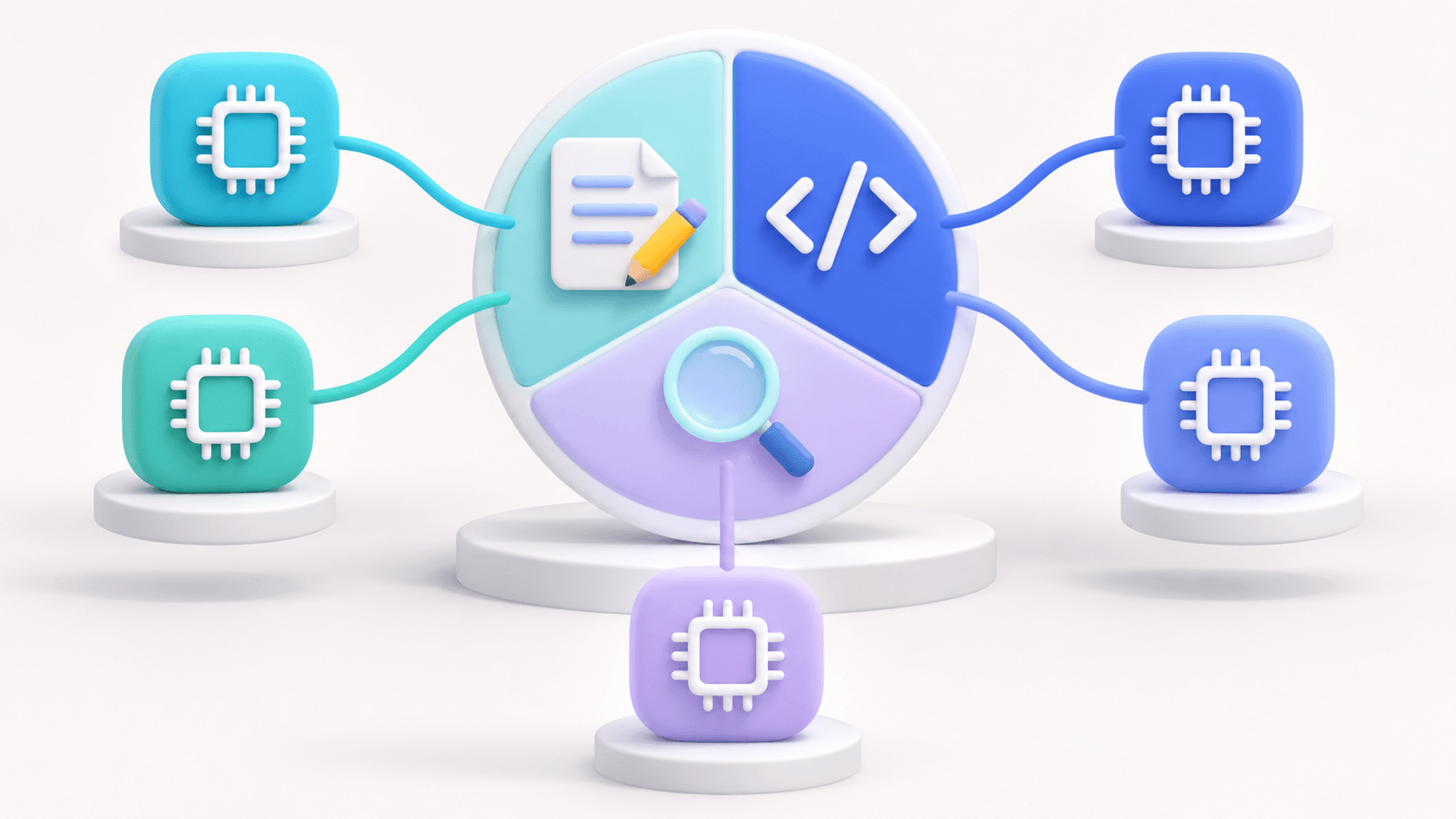
The question “Which AI is best?” sounds simple, but it usually leads to the wrong comparison. ChatGPT, Gemini, Claude, DeepSeek, and Grok are not five identical chatbots competing on one scoreboard. Each service combines different models, tools, integrations, limits, and design choices.
A model that feels excellent for drafting an article may not be the best option for analyzing a long document. Another may be stronger for coding, current information, or a workflow built around Google products. The useful question is not “Which AI wins?” It is “Which AI fits the work I need to do?”
There Is No Single Best AI
For many people, ChatGPT is the most balanced general-purpose choice. Gemini is especially appealing when your work already lives in Google’s ecosystem. Claude is known for careful writing, document-heavy tasks, and code work. DeepSeek is worth testing for technical reasoning and cost-conscious API use. Grok can be useful for fast-moving topics and conversations connected to X.
That summary is a starting point, not a permanent ranking. Results change with the model version, subscription tier, enabled tools, language, prompt quality, and the task itself. A short benchmark using your own real work is more valuable than a universal leaderboard.
ChatGPT: A Strong All-Rounder
ChatGPT covers a broad range of everyday tasks. It can help with writing, editing, learning, brainstorming, translation, coding, file analysis, data work, and image generation. Depending on the plan and region, users may also have access to web search, deep research, voice, and other tools.
Its main advantage is versatility. A single workspace can support a student reviewing a difficult concept, a marketer preparing campaign ideas, a developer debugging code, or an analyst working with a spreadsheet.
That breadth can also be confusing. There may be several models and tools to choose from, and not every feature is available to every account. Still, if you want one assistant for many different tasks, ChatGPT is one of the safest places to start.
Gemini: Best for Google-Centered Workflows
Gemini becomes more compelling when Gmail, Google Drive, Docs, and other Google services are already central to your work. The value is not only the quality of the model; it is also the convenience of working close to the tools and files you use every day.
Gemini can be useful for research, summarizing documents, working with files, generating media, and organizing information from a Google-based workflow. Its research features can also help gather sources and turn them into a structured report.
Some capabilities depend on the account, plan, region, or product integration. If most of your work happens inside Google’s ecosystem, however, Gemini can feel more connected than a standalone chatbot.
Claude: Strong for Writing, Documents, and Code
Claude is often a good fit for work that requires a consistent tone, careful structure, or close attention to a long source document. Writers, researchers, product teams, and developers may appreciate its ability to turn scattered material into a coherent draft.
It is particularly useful for professional writing, editing, comparing documents, summarizing long files, thinking through a product decision, and reviewing or improving code.
No model should be trusted automatically, especially when facts, citations, legal language, or business decisions are involved. Claude’s polished writing can still contain mistakes, so the final result needs a human review.
DeepSeek: Worth Testing for Technical Reasoning
DeepSeek has attracted attention for reasoning, mathematics, coding, and API use. For developers and technical teams, it can be a useful option to include in a side-by-side test, especially when cost is an important part of the decision.
It may perform well on structured problems, code generation, debugging, and technical explanations. But performance is not identical across every task, language, or deployment. Privacy requirements, hosting choices, latency, and operational reliability also matter for production use.
DeepSeek is not automatically the best choice for every technical task. It is valuable because it gives teams another competitive option to test with their own examples and constraints.
Grok: Useful for Fast-Moving Topics
Grok is closely associated with X and is designed for a more direct, conversational style. When search or current-information tools are available, it can be helpful for exploring fast-moving discussions, public reactions, and developing topics.
It may suit users who want quick idea generation, trend-oriented research, or a less formal conversational tone. The same strengths require caution: current information can be incomplete, noisy, or wrong, and social posts are not a substitute for reliable sources.
Use Grok as a way to discover questions and signals, then verify important claims with primary or authoritative sources.
Which AI Is Best for Writing, Coding, and Research?
For writing, ChatGPT and Claude are strong general choices. Claude often feels natural for long-form editing and maintaining tone, while ChatGPT offers a wider mix of writing, research, data, and media tools.
For coding, ChatGPT, Claude, and DeepSeek are all worth testing. The best option depends on the programming language, project size, repository context, and whether you need explanation, generation, debugging, or architecture support.
For research, tool access matters as much as the underlying model. Gemini can be convenient for Google-centered workflows, while ChatGPT’s research tools may suit broader multi-step work. Grok may help surface current conversations, but important claims should always be checked against credible sources.
What About Non-English Work?
A strong English answer does not guarantee an equally strong result in another language. Grammar, tone, local terminology, directionality, and cultural context can change the outcome.
If you work in Persian or another non-English language, test the same prompt in several models. Check fluency, factual accuracy, punctuation, formatting, and whether the model keeps your intended voice. For important content, human editing remains essential.
A Practical Way to Choose
Start with one real task, not a generic question. Give the same source material, instructions, and output requirements to two or three models.
Then compare the results using criteria that matter to you:
-
Accuracy: Are the facts and calculations correct?
-
Clarity: Is the answer easy to understand and well structured?
-
Instruction following: Did the model respect the format, tone, and limits?
-
Useful tools: Can it search, read the required files, analyze data, or work with your existing apps?
-
Speed and cost: Is the result worth the time and usage cost?
-
Privacy: Is the service appropriate for the information you plan to provide?
Do not upload passwords, API keys, private customer data, confidential documents, financial details, or other sensitive information unless your organization has approved the service and configuration.
Final Takeaway
ChatGPT, Gemini, Claude, DeepSeek, and Grok are better understood as different toolkits than as interchangeable chatbots. ChatGPT is a flexible all-rounder. Gemini fits Google-heavy workflows. Claude is strong for writing, long documents, and code. DeepSeek deserves attention for technical reasoning and cost-sensitive API work. Grok can help with current conversations and trend discovery.
The smartest choice may not be one permanent winner. It may be a workflow that uses different models for different jobs. A multi-model platform such as Hoveydai can make that comparison easier by giving users access to several options in one place. Whatever you choose, verify important information before acting on it.-